
This Indiana Expungement Quick Start Guide to Clearing Your Record contains basic information about the Indiana expungement process. It is a good starting place for people who have no understanding of the expungement process. If you already understand the basics of expungement, you may want to review the more in-depth 2026 Indiana Expungement Law Guide.
In order to begin your Indiana Criminal Record Expungement application, call 317-695-7700. I have over a 99% success rate on expungements, have handled thousands of expungement petitions, practice expungement in the entire state of Indiana, and provide a MONEY BACK GUARANTEE on ALL expungements. You can also email me at jeffcardella@cardellalawoffice.com. If you are emailing me, please include your date of birth and the spelling of your name as it appears on mycase.in.gov. For the majority of expungements, no court appearance or office visit is necessary, and we offer very reasonable prices. I have taught criminal law at the IU McKinney School of Law and have served as a Judge pro tem. I was selected as one of the Top 100 Attorneys by the National Trial Lawyers. I have been recognized as a Top Ten Attorney in the State of Indiana by the American Institute of Criminal Law Attorneys. I was also recognized as a Top 10 Under 40 Criminal Defense Attorney by The National Academy of Criminal Defense Attorneys.
Indiana Expungement: Your Guide to Clearing Your Record

If you’re looking to move past a criminal record in Indiana, expungement might be the key. This comprehensive guide explains what Indiana expungement is, who qualifies, how the process works, and why working with an experienced attorney can make all the difference. Ready to clear your record? Let’s dive in.
What Is Indiana Expungement?
Indiana expungement is a legal process that expunges certain criminal records. Under Indiana law (IC 35-38-9), sealing doesn’t erase your record entirely—it remains visible to law enforcement and certain government agencies—but it prevents most employers, landlords, and the general public from accessing it. This can open doors to jobs, housing, and opportunities that a criminal history might otherwise block.
Expungement in Indiana applies to arrests, charges, and convictions, but eligibility depends on the nature of the offense and time elapsed since the event. It’s a powerful tool for a fresh start, and understanding the specifics of Indiana expungement laws is the first step toward making it happen.
Who Qualifies for Indiana Expungement?
Not every record qualifies for expungement in Indiana. Here’s a breakdown of eligibility:
- Arrests Without Conviction: If you were arrested but not convicted, you can petition to seal the record one year after the arrest, provided no charges are pending. If your arrest is new, it will automatically be expunged under the new expungement law.
- Misdemeanors: Most misdemeanor convictions can be expunged five years after the conviction date, as long as you’ve completed your sentence and have no new charges. These cases can also generally be sealed.
- Minor Felonies: Certain felonies (e.g., non-violent Class D or Level 6 felonies) are eligible eight years after conviction, assuming you’ve met all sentencing requirements. Most (but not all) can also be sealed.
- DCS Cases: Some Department of Child Services cases can be expunged.
- Eviction Records: Eviction filings can sometimes be expunged.
- Ineligible Offenses: Serious felonies like murder, sex crimes, or public corruption convictions cannot be expunged under Indiana law.
To file for Indiana expungement, you must also show you’ve stayed out of trouble—no pending charges or recent convictions. Unsure if your case qualifies? My office offers free consultations to review your record and confirm your eligibility.
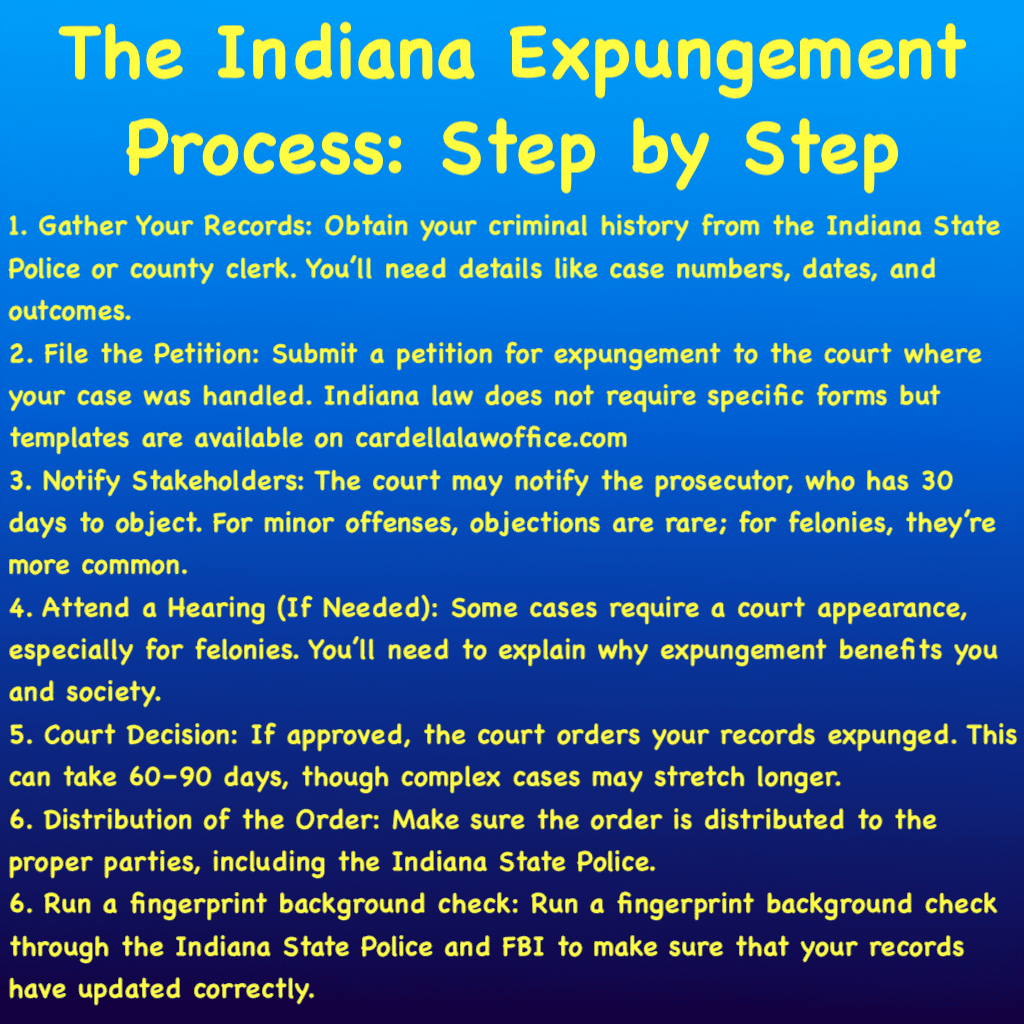
The Indiana Expungement Process: Step by Step
The process for Indiana expungement isn’t a quick fix—it requires precision and patience. Here’s how it works:
- Gather Your Records: Obtain your criminal history from the Indiana State Police or county clerk. You’ll need details like case numbers, dates, and outcomes.
- File a Petition: Submit a petition for expungement to the court where your case was handled. Indiana law does not require specific forms, but templates are available on cardellalawoffice.com.
- Notify Stakeholders: The court may notify the prosecutor, who has 30 days to object. For minor offenses, objections are rare; for felonies, they’re more common.
- Attend a Hearing (If Needed): Some cases require a court appearance, especially for felonies. You’ll need to explain why expungement benefits you and society.
- Court Decision: If approved, the court orders your records expunged. This can take 60–90 days, though complex cases may take longer.
- Distribution of the Order: Make sure the order is distributed to the proper parties, including the Indiana State Police.
- Run a Fingerprint Background Check: Run a fingerprint background check through the Indiana State Police and FBI to ensure that your records have updated correctly.
Benefits of Indiana Expungement
Why pursue Indiana expungement? The advantages are life-changing:
- Employment: Background checks by the public won’t reveal sealed records, boosting your odds with employers.
- Housing: Landlords can’t use expunged records to deny your application.
- Peace of Mind: Move forward without the stigma of a past mistake.
For example, a client we helped in Indianapolis expunged a misdemeanor theft charge from 2015. Within months, he landed a job he’d been rejected from twice before. Indiana expungement doesn’t just clear records—it clears paths.
Common Questions About Indiana Expungement
- How long does it take? Typically 3–6 months, depending on court backlog and case complexity.
- Can I expunge multiple offenses? Yes, but each requires its own petition unless they’re from the same county.
- What if my petition is denied? You may refile after one year, though some denials (e.g., ineligible offenses) are final.
Still have questions? Contact my office—we’re here to clarify Indiana expungement for you.
DIY vs. Hiring an Indiana Expungement Lawyer
You might wonder: Can I handle Indiana expungement on my own? Technically, yes—courts accept pro se filings. But here’s why DIY often falls short:
- Errors Cost Time: A procedural error can derail your case.
- Prosecutor Pushback: Some petitions face objections; an attorney knows how to counter them. If you are a pro se litigant going against a licensed attorney in a procedural chess game, you are almost always going to lose.
- Court Nuances: Each Indiana county (Marion, Hamilton, etc.) has unique customs that experienced lawyers navigate effortlessly.
- One-Time Opportunity: You generally have one opportunity to file for expungement per lifetime.

Eligibility Criteria
The eligibility criteria for expungement in Indiana vary depending on the nature of the offense and the time elapsed since the conviction or arrest. Here are the main categories:
Arrests Not Leading to Conviction
Individuals who were arrested but not convicted can petition for expungement. This includes cases where charges were never filed, charges were dismissed, or the individual was acquitted at trial. For example, if someone was arrested on suspicion of theft but the charges were later dropped, they could seek to have the arrest record expunged.
Misdemeanor Convictions
Misdemeanor convictions are eligible for expungement five years after the date of the last conviction. This category includes most misdemeanors, but certain offenses, such as those involving violence or sexual misconduct, may have additional restrictions. For instance, a person convicted of a minor drug possession offense could apply for expungement five years after completing their sentence.
Class D Felony or Level 6 Felony Convictions
Class D felonies (under the old classification system) and Level 6 felonies (under the current system) are eligible for expungement eight years after the date of conviction. These offenses are considered less severe than higher-level felonies and include crimes such as theft, drug possession, and certain types of fraud. For example, someone convicted of a Level 6 felony for theft could seek expungement eight years after their conviction.
Other Felony Convictions
More serious felony convictions may also be eligible for expungement, but the waiting period is longer, and additional criteria may apply. For example, certain violent felonies and sex offenses may require a longer waiting period or may not be eligible for expungement at all. A person convicted of a non-violent Class C felony might be eligible for expungement after a longer period, such as ten years.
Types of Records That Can Be Expunged
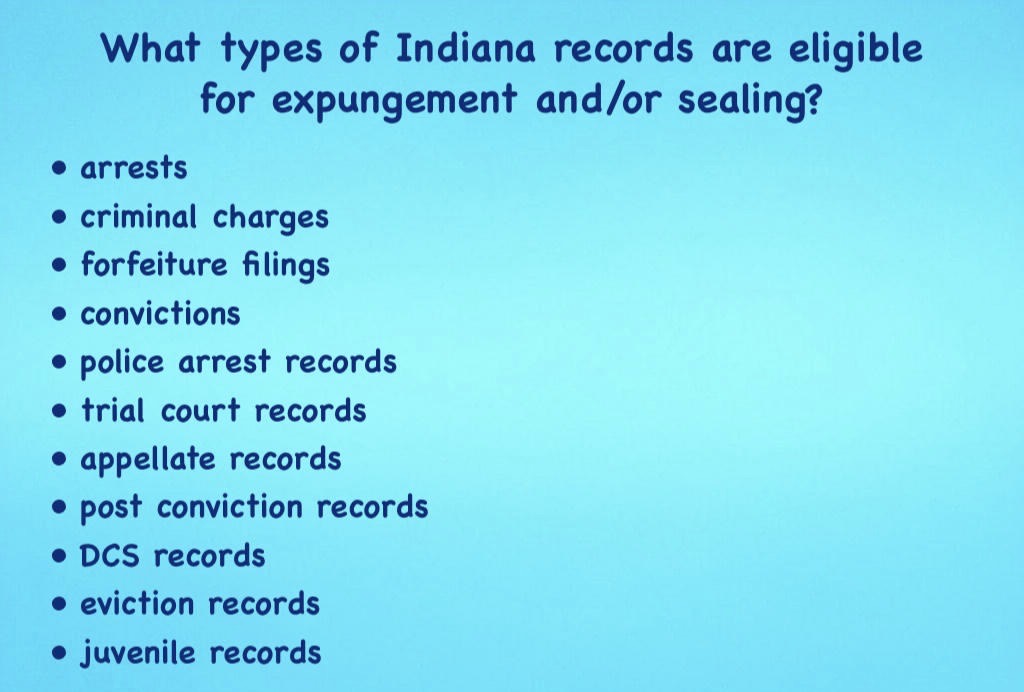
Expungement in Indiana can apply to various types of records, including arrest records, conviction records, and juvenile records. Each type has specific requirements and procedures.
Arrest Records
Arrest records can be expunged if no charges were filed, charges were dismissed, or the individual was acquitted. This process helps individuals clear their names and avoid the negative consequences of having an arrest record. For example, if someone was wrongfully arrested for a crime they did not commit, they could petition to have the arrest record expunged to prevent it from affecting their future opportunities.
Conviction Records
Certain misdemeanor and felony convictions can be expunged, as specified by the law. The eligibility criteria and waiting periods vary depending on the nature of the offense and the time elapsed since the conviction. For instance, a person convicted of a misdemeanor for public intoxication could apply for expungement five years after their conviction, while someone convicted of a Level 6 felony for drug possession would need to wait eight years.
Juvenile Records
Juvenile records can also be expunged under specific conditions. This process is designed to help young individuals move past their mistakes and avoid the long-term consequences of having a criminal record. For example, a juvenile who was adjudicated delinquent for a minor offense could seek to have their record expunged once they reach adulthood, provided they meet the eligibility criteria.
Legal Implications of Expungement
Expungement has several legal implications, including the possible sealing of records, changes in disclosure requirements, and exceptions for certain entities.
Sealing of Records
Sealed records are not accessible to the public. This means that employers, landlords, and other members of the public cannot access the records through background checks or other means. For example, if someone has their misdemeanor conviction for disorderly conduct expunged, potential employers will not see this conviction on a background check.
Disclosure Requirements
Individuals are not required to disclose sealed records on job applications, housing applications, or other forms. This can significantly improve opportunities for employment, housing, and other aspects of life. For instance, a person with a sealed felony conviction for drug possession can legally state that they have not been convicted of a felony on a job application.
Exceptions
Certain entities, such as law enforcement agencies, may still access expunged records under specific circumstances. For example, expunged records may be accessed for law enforcement purposes, background checks for certain types of employment, or other legal reasons. For instance, a person applying for a law enforcement position may still have their expunged records reviewed as part of the background check process.
Recent Amendments and Updates
Indiana’s expungement law has undergone several amendments and updates in recent years. These changes have expanded eligibility criteria, streamlined the process, and introduced new provisions for automatic expungement.
Automatic Expungement
In some cases, records may be automatically expunged without the need for a petition. This provision applies to certain types of records, such as arrests not leading to conviction, and is designed to simplify the expungement process. For example, if someone was arrested but never charged, their arrest record might be automatically expunged after a certain period.
Changes in Eligibility
Recent amendments have expanded the eligibility criteria for expungement, allowing more individuals to qualify for the process. These changes include shorter waiting periods for certain offenses and broader eligibility for misdemeanor and felony convictions. For instance, a recent amendment might reduce the waiting period for expunging a misdemeanor conviction from five years to three years.
Benefits of Expungement
Expungement offers several benefits, including improved employment opportunities, better housing access, and reduced social stigma.
Employment Opportunities
Expungement can remove barriers to employment by sealing criminal records. This allows individuals to apply for jobs without disclosing their criminal history, improving their chances of securing employment. For example, a person with an expunged misdemeanor conviction for petty theft can apply for retail jobs without worrying about their criminal record affecting their chances.
Housing Access
Landlords may not access expunged records, improving housing prospects for individuals with expunged records. This can help individuals find stable housing and avoid discrimination based on their criminal history. For instance, someone with an expunged felony conviction for drug possession can apply for rental housing without the landlord seeing their criminal record.
Social Stigma
Expungement reduces the social stigma associated with a criminal record, allowing individuals to move forward with their lives without the burden of their past mistakes. This can improve self-esteem, mental health, and overall quality of life. For example, a person with an expunged misdemeanor conviction for disorderly conduct can participate in community activities without fear of judgment or discrimination.
Challenges and Considerations
While expungement offers many benefits, there are also challenges and considerations to keep in mind.
Legal Assistance
Navigating the expungement process can be complex, and legal assistance is often recommended. A professional can help individuals understand their eligibility, prepare the necessary documents, and represent them in court. For example, a professional can assist in gathering evidence of rehabilitation, such as certificates of completion for treatment programs or letters of support from employers and community members.
Filing Fees
There may be fees associated with filing a petition for expungement. These fees can vary depending on the court and the nature of the case. Some individuals may qualify for fee waivers or financial assistance. For instance, a person with limited financial resources might be able to apply for a fee waiver to reduce the cost of filing their petition.
Waiting Periods
Specific waiting periods must be met before filing for expungement. These waiting periods vary depending on the nature of the offense and the time elapsed since the conviction or arrest. For example, a person convicted of a misdemeanor must wait five years from the date of the last conviction before applying for expungement, while someone convicted of a Level 6 felony must wait eight years from the date of the last conviction.
Multiple Convictions
Individuals with multiple convictions may face additional challenges in seeking expungement. The law may have specific provisions for handling multiple convictions, and the process can be more complex. For instance, a person with both misdemeanor and felony convictions may need to file separate petitions for each conviction and meet different eligibility criteria for each.
Impact on Civil Rights
Expungement can restore certain civil rights, such as the right to vote, the right to serve on a jury, and the right to hold public office. However, the restoration of these rights may vary depending on the nature of the offense and the specific provisions of the expungement order. For example, a person with an expunged felony conviction may regain their right to vote but may still face restrictions on owning firearms.
Employment and Licensing
While expungement can improve employment opportunities, certain professions and licensing boards may still consider expunged records. For example, individuals seeking employment in law enforcement, healthcare, or education may be required to disclose expunged records as part of the background check process. Licensing boards for professions such as law, medicine, and real estate may also have specific requirements regarding expunged records.
Resources and Support
Several resources and organizations can provide support and assistance for individuals seeking expungement in Indiana.
Legal Aid Organizations
Legal aid organizations offer free or low-cost legal assistance to individuals who are low income. These organizations can help with the expungement process, including filing petitions and representing clients in court. Examples of legal aid organizations in Indiana include Indiana Legal Services and the Neighborhood Christian Legal Clinic.
Expungement Clinics
Expungement clinics are events where individuals can receive free legal assistance with the expungement process. These clinics are often hosted by legal aid organizations, law schools, and community groups. Participants can receive help with determining eligibility, preparing petitions, and understanding the expungement process.
Online Resources
Several online resources provide information and guidance on the expungement process in Indiana. These resources include websites, guides, and toolkits that explain the eligibility criteria, steps involved, and necessary forms. Examples of online resources include the Indiana Courts website and the Indiana Legal Help website.
Conclusion
Indiana’s expungement law provides a valuable opportunity for individuals to clear their criminal records and improve their lives. Understanding the eligibility criteria, process, and benefits is crucial for those seeking expungement. While the process can be complex and challenging, the potential benefits make it a worthwhile endeavor for many individuals.

DISCLAIMER – The information contained on this website is provided for educational and informational purposes only and should not be construed as legal advice or as an offer to perform legal services on any subject matter. The content of this website contains general information and may not reflect current legal developments or information. The information is not guaranteed to be correct, complete, or current. We make no warranty, expressed or implied, about the accuracy or reliability of the information at this website or at any other website to which it is linked. Recipients of content from this site should not act or refrain from acting on the basis of any information included in the site without seeking appropriate legal advice on the particular facts and circumstances at issue from one who is licensed in the recipient’s state. Nothing herein is intended to create an attorney-client relationship and shall not be construed as legal advice. This is not an offer to represent you.